
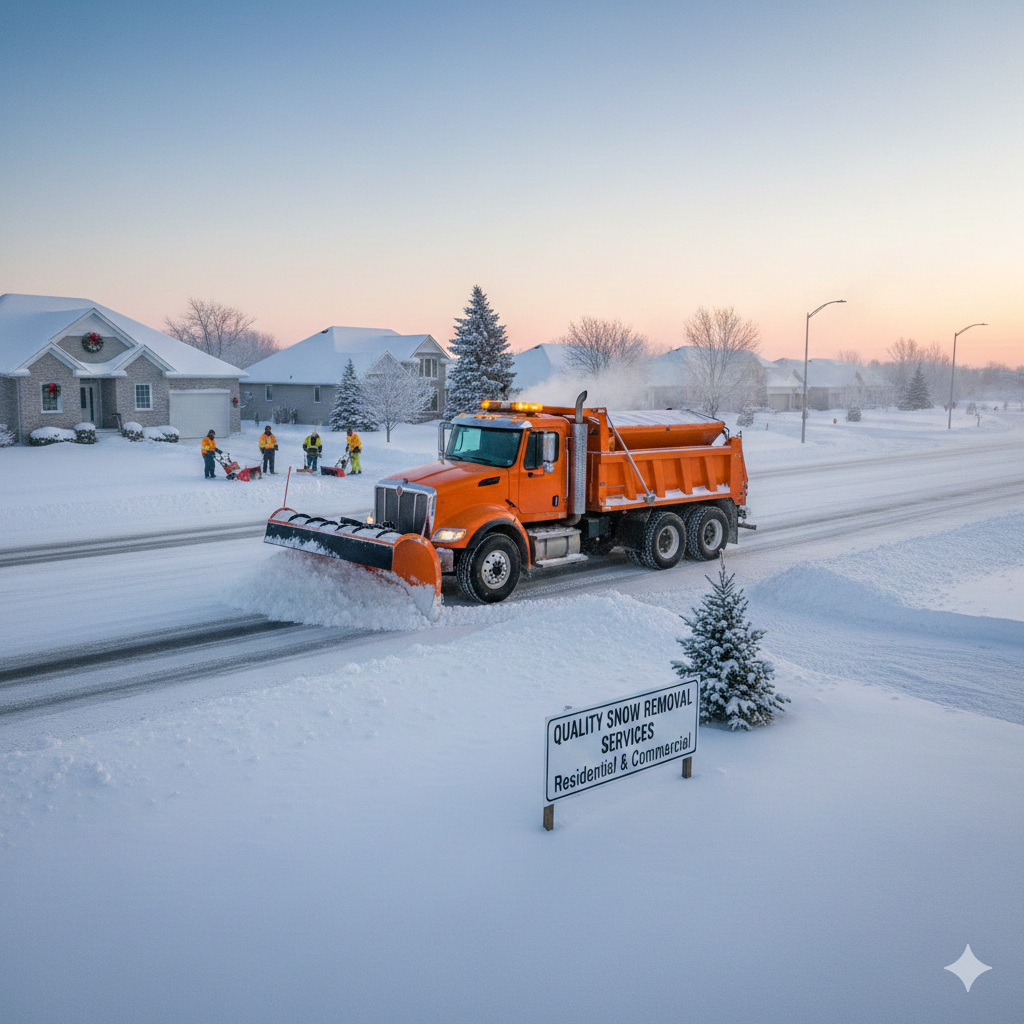
Finding reliable residential snow removal near you saves time and prevents slips, vehicle damage, and missed appointments. You can hire local pros for one-off storms, seasonal contracts, or on-demand clearing to keep driveways, walkways, and entryways safe and accessible all winter.
This guide Residential Snow Removal Near Me walks you through what services to expect, how providers handle plowing, shoveling, blowing, and de-icing, and which factors matter when comparing quotes and reviews. Use the tips ahead to match service frequency, price, and responsiveness to your needs so your property stays clear without surprises.
Residential Snow Removal Services Near Me
You can expect services that clear driveways, walkways, and entryways, offer de-icing, and provide scheduled or one-time visits. Look for providers that list equipment (plows, snow blowers) and flexible booking so you get quick, reliable results.
Types of Snow Removal Solutions
You can choose from manual shoveling, snow blowing, and plowing depending on your driveway size and obstacles. Manual shoveling suits short walkways and tight spaces; snow blowers work best for medium to large driveways without steep grades; plow service clears long or steep driveways quickly.
Many contractors also provide salting and de-icing to prevent refreeze and improve traction. Ask which de-icers they use, how they apply them, and whether they protect concrete and vegetation. Seasonal contracts, on-demand calls, and single-service bookings are common — pick the model that matches how often you need clearing and your budget.
Service Area Coverage
Check the provider’s defined coverage map or neighborhoods served before you hire. Some firms list specific cities or postal codes; others serve wider regions but add travel fees for properties far from their base.
Confirm whether contractors handle both residential streets and private lanes, and whether they clear sidewalks to the property line or only driveways. Ask about equipment access limits (narrow drives, gates) and any acreage or driveway-length caps that change pricing or eligibility.
Response Time and Availability
Compare guaranteed response windows: same-day, within 24 hours, or storm-priority dispatch. Providers that offer storm-priority plans will arrive faster during heavy snowfall; basic plans may be scheduled next business day.
Verify winter hours and emergency contacts for nights or weekends. Also confirm how they notify you (text, email, app) when they’re en route or complete work, and whether they honor no-show or re-service policies if the snow returns shortly after clearing.
Choosing the Right Residential Snow Removal Provider
Compare costs for the services you actually need, confirm licensing and insurance, and check recent customer feedback before you sign a contract. Prioritize providers who offer clear pricing, proof of coverage, and local references.
Local Pricing Considerations
Local pricing varies by service type, frequency, and property characteristics. Ask for quotes that separate line items: driveway plowing, sidewalk shoveling, de-icing, and per-storm emergency calls. That helps you compare apples to apples.
Request both seasonal contracts and per-visit rates. Seasonal contracts often include priority service during storms but can carry a higher upfront cost. Per-visit pricing may suit infrequent needs, but confirm minimum fees and travel charges.
Factor in property specifics: driveway length, surface type (gravel or paved), steep grades, and obstacles like parked cars or landscaping. These affect time, equipment needs, and wear on machinery — and therefore price.
Use a short checklist when getting quotes:
- Service list and exclusions
- Response time during storms
- Equipment used (plow truck, skid-steer, walk-behind)
- Payment terms and cancellation policy
Licensed and Insured Companies
Hire a provider that shows current business registration and local permits when required. Licensing demonstrates compliance with municipal rules and often correlates with professional standards.
Insurance matters more than you might expect. Require proof of general liability and workers’ compensation insurance. Liability covers property damage; workers’ comp protects you from claims if a worker is injured on your property.
Ask for coverage limits in writing and note policy expiration dates. If a contractor cannot produce certificates of insurance, consider that a red flag. Also confirm whether subcontractors are covered under the same policies.
Document everything before work begins. Keep copies of contracts, certificates of insurance, and license numbers. That paperwork speeds claim resolution if damage or injury occurs.
Reviews and Reputation
Look for recent, location-specific reviews rather than aggregated national ratings. Prioritize comments about reliability during heavy storms, punctuality, and whether the crew respects property edges and landscaping.
Check multiple sources: platform reviews, local community groups, and direct references from neighbors. Pay attention to responses from the company — professional, timely replies indicate good customer service and accountability.
Watch for consistent issues across reviews: missed visits, unclear pricing, or frequent damage claims. One or two negative reviews happen, but patterns reveal operational weaknesses. Ask providers for references from at least two nearby customers and call them.
Create a simple scorecard when comparing providers:
- Reliability (on-time service, storm response)
- Transparency (clear quotes, written policies)
- Damage history (claims or repairs)
- Customer service (responsiveness, dispute resolution)