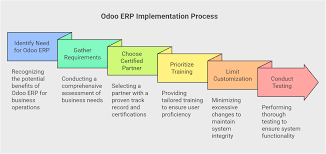
ERP failures in billion-dollar enterprises still happen even when budgets could fund a small country because money cannot fix chaos disguised as strategy. Odoo adds another twist to its flexibility, which looks like a dream until it behaves like a rebellious intern rewriting rules mid-meeting. This is not just a tech rollout; it is risk governance wearing a software badge.
Expert Odoo Implementation Services step in to bring discipline before things go off the rails and budgets start crying in spreadsheets. That is when experience matters, and blind optimism finally gets shown the door with no farewell cake at all.
Why do enterprise ERP projects fail even after significant investment and planning?
Even the most well-funded ERP initiatives can quietly unravel when hidden gaps in strategy, alignment, and accountability begin to surface beneath the surface.
Board blind spots
Big decisions often happen in rooms where reality politely waits outside. Leadership signs off on vision slides that look perfect but hide messy ground truth. Assumptions go unchecked, and risks get a free pass like uninvited guests at a wedding. When things fall apart later, execution teams get blamed while strategy quietly disappears into thin air.
IT business disconnect
Business wants speed while IT wants stability, and both nod in meetings like everything is fine. Requirements turn into a game of broken telephone, and systems end up solving problems no one actually has. This gap breeds confusion and delays. Expert Odoo Implementation Services help align both sides before the circus begins.
Overpromised ROI
Numbers look beautiful on paper, and logic takes a holiday. Returns get inflated like festival balloons ready to burst at the worst moment. When reality hits, expectations crash harder than a bad stock tip. The problem starts at the approval stage, where optimism beats experience without even trying.
Vendor overreliance
Vendors are treated like magicians expected to fix everything with a wand and a timeline that defies physics. Internal ownership fades, and accountability becomes a hot potato no one wants to hold. Without strong governance, even the best partners struggle, and the project turns into a blame game.
Late risk visibility
Risks are spotted when damage is already done, and everyone suddenly becomes an expert in hindsight. Warning signs exist early but get ignored like unread emails. By the time the alarms ring, the project is knee deep in trouble. Strong oversight and experienced Odoo Implementation Services bring risks into daylight before chaos takes over.
What makes Odoo fundamentally different from legacy ERP systems in terms of risk exposure?
Odoo’s flexibility and openness unlock powerful possibilities, but they also introduce a different kind of risk that organizations must actively manage rather than assume away.
Open architecture risks
Odoo runs like an open playground while legacy systems act like strict boarding schools. Flexibility invites freedom but also invites chaos if left unchecked. Anyone can extend the system, and suddenly, governance becomes optional. Without expert Odoo Implementation Services, things can spiral faster than a bad decision in a boardroom.
Module interdependencies
Modules in Odoo behave like a tightly packed family where one argument ruins everyone’s day. A small change in one area quietly disturbs another, and surprises arrive unannounced. Legacy systems hide this better, but Odoo shows it upfront. Strong control keeps these relationships from turning into daily drama.
Rapid customization ease
Customization in Odoo is quick and tempting like fast food that looks good until consequences arrive later. Teams start changing things without thinking long-term. What feels like progress can become technical debt overnight. Discipline matters because speed without direction is just chaos wearing a suit.
Ecosystem variability
The Odoo ecosystem offers plenty of choices, and not all are created equal. Some partners deliver value while others deliver confusion wrapped in confidence. Picking the wrong support feels like betting on a coin toss. Careful selection and experience separate stable growth from expensive lessons learned the hard way.
Version upgrade fragility
Upgrades in Odoo can feel like moving a house of cards during a windy day. Custom work and dependencies make transitions delicate. What worked yesterday may refuse to cooperate today. Proper planning and expert handling ensure that upgrades do not turn into crisis-management marathons.
How does a lack of Odoo-specific expertise amplify transformation risk in large enterprises?
Without deep platform-specific knowledge, even well-intentioned transformation efforts can drift into costly missteps that compound over time.
Misused flexibility
Odoo flexibility without expertise is like giving a chainsaw to someone who wants a butter knife. Everything gets customized, and nothing stays stable. What starts as a smart adaptation turns into uncontrolled chaos. Expert Odoo Implementation Services bring restraint so the system does not become a playground for bad decisions.
Poor module selection
Choosing modules without understanding the platform feels like assembling furniture without reading the manual. Pieces fit, but nothing works properly. General ERP knowledge misses Odoo nuances, and wrong choices pile up fast. Soon, the system solves problems that never existed while real issues sit untouched.
Inefficient workflows
Workflows are designed around habits rather than logic, and the system ends up replicating old inefficiencies in digital form. It is like putting new paint on a broken wall. Without platform-specific thinking processes, performance becomes slower, not better. That defeats the entire purpose of transformation.
Technical debt buildup
Shortcuts look clever at first and later behave like unpaid bills, knocking loudly. Poor coding and rushed changes pile up quietly. Fixing them later costs more than doing it right once. This is where experience separates control from long-term damage.
Scaling limitations
Systems built without Odoo expertise struggle when business grows and pressure increases. What worked for a small setup collapses under scale like a cheap chair at a serious meeting. Proper planning ensures the system grows with the business rather than becoming a bottleneck.
Why do most Odoo implementations fail at the process design stage rather than the technology?
In most cases, it is not the technology that breaks down, but the flawed processes carried into the system that quietly undermine its effectiveness from day one.
Legacy process carryover
Old processes walk into Odoo wearing new clothes, and everyone pretends progress has happened. Broken steps get automated instead of fixed, which is like polishing a cracked mirror. The system runs, but the logic stays flawed. Expert Odoo Implementation Services: stop this habit before history repeats itself.
Departmental silos
Each department guards its process like family secrets, and collaboration becomes a rare event. Odoo expects integration, but silos create friction at every step. Data stops flowing, and confusion quietly takes over. The result is a system that looks connected but behaves like strangers sharing the same office.
No process ownership
When everyone is responsible, no one is, and decisions float without direction. Process gaps stay open because no one owns the outcome. Issues pile up, and accountability disappears faster than snacks in a meeting room. Clear ownership keeps the system grounded and decisions consistent.
Shadow workflows
Teams start building side processes outside Odoo because they do not trust the system. Spreadsheets return like unwanted guests who never leave. This creates parallel realities where data never matches. It defeats the purpose and turns the implementation into a never-ending cleanup exercise.
Compliance gaps
Processes ignore compliance until audits arrive, and then panic becomes the main workflow. Controls get added late and never fit properly. This exposes the business to risks that could have been avoided earlier. Strong design ensures compliance is built in rather than treated as an afterthought.
How do expert Odoo partners enforce discipline in scope and customization decisions?
Experienced Odoo partners bring structured decision-making and firm boundaries that prevent projects from drifting into unnecessary complexity and uncontrolled expansion.
Value-based scoping
Experts cut through wish lists like a sharp knife through overcooked logic. Every requirement must justify its existence, or it gets shown the exit. This keeps the scope grounded in business value rather than personal preference. Odoo Implementation Services brings this discipline before the scope turns into a never-ending buffet.
Customization thresholds
Not every idea deserves to become code, and experts know where to draw the line. They set limits so customization does not run wild like an unsupervised experiment. Saying no here saves months later. It keeps the system stable instead of turning it into a fragile masterpiece.
Standardization bias
Experts lean toward standard features even when teams demand fancy changes. It may feel restrictive, but it prevents unnecessary complexity from creeping in. Standard flows bring consistency and reduce surprises. This approach keeps operations smooth rather than constantly fixing avoidable issues.
Change control rigor
Every change goes through scrutiny like a suspect under bright lights. Nothing slips through without impact analysis and approval. This slows down impulse decisions that usually create long-term headaches. Discipline here ensures the project stays on track and does not drift into chaos.
Architecture reviews
Experts review the system like architects checking a foundation before adding floors. Weak structures are fixed early rather than collapsing later. These reviews protect long term stability and performance. It is better to face hard truths early than deal with expensive disasters later.
How does enterprise-grade implementation methodology reduce execution uncertainty?
A structured, enterprise-grade methodology introduces control, visibility, and checkpoints, turning unpredictable execution into a more manageable, measured process.
Phased deployment logic
Rolling everything out at once sounds brave until it turns into a full-scale mess. Phased deployment breaks complexity into manageable parts and keeps damage contained. Each phase reveals issues early before they grow teeth. Expert Odoo Implementation Services follow this approach to keep execution steady rather than reckless.
Parallel run strategy
Running old and new systems together feels like extra effort, but it saves serious trouble later. It exposes gaps while there is still time to fix them. Without this step, surprises hit like a truck on go-live day. This is controlled caution, not unnecessary delay.
Dependency mapping
Every process has hidden connections, and ignoring them is asking for chaos. Dependency mapping uncovers these links before they create confusion. It ensures changes do not trigger unexpected failures. This clarity keeps the system from behaving like a puzzle missing key pieces.
Risk buffering
Plans without buffers are wishful thinking dressed as confidence. Delays and issues are part of reality, and pretending otherwise is dangerous. Risk buffers absorb shocks and keep timelines realistic. This prevents panic-driven decisions that usually make things worse.
Decision checkpoints
Continuous progress without pause is a fast track to regret. Decision checkpoints force teams to review direction before moving ahead. They catch mistakes early and avoid costly corrections later. This discipline keeps execution aligned and prevents blind momentum from taking control.
Conclusion
Odoo success rarely fails because of software, and almost always fails because discipline quietly packed its bags early. Flexibility is powerful, but without control, it behaves like a genius with no supervision, and that story never ends well. Expert Odoo Implementation Services bring structure where guesswork once ruled and keep strategy from turning into expensive regret.
Strong execution reduces both financial surprises and operational chaos. Enterprises that treat ERP like a serious transformation effort stay ahead while others keep fixing problems they created themselves. In simple terms, discipline saves money while shortcuts send invoices nobody wants to read later.